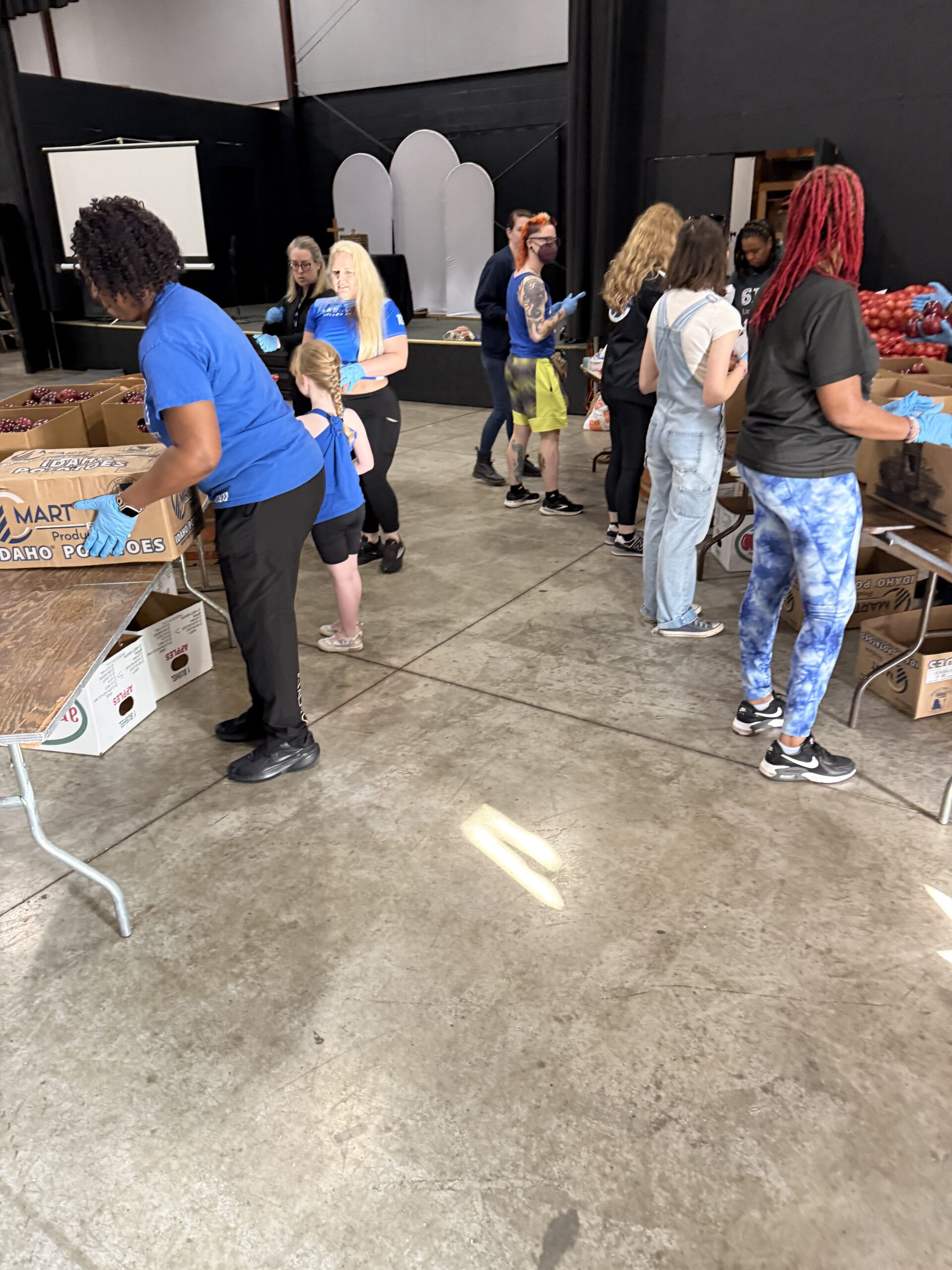
On Saturday mornings in Antioch, Tennessee, Hamilton United Methodist Church is already in motion before most of the neighborhood wakes up. Volunteers gather early, preparing food boxes, directing traffic, and greeting families as they arrive. By the time distribution begins, a long line has already formed—some arriving as early as 7:30 a.m., waiting for a nine o’clock start.
Hamilton United Methodist Church sits in one of the most diverse areas of the Nashville region, serving a community that includes more than 18 nationalities on any given Sunday. The church itself reflects that diversity through three worshiping congregations sharing one building: a traditional Methodist service, an Arabic congregation, and a growing 9 a.m. service that has become the largest gathering.
“It is a vibrant community,” said Quentin Dickerson, program contact. “But we’re seeing a real need—especially around access to fresh, healthy food.”
Food insecurity in the area is shaped not only by economic pressure but also by limited access to nutritious options that reflect the community’s diverse cultural needs. Many families rely heavily on pantry staples, but fresh produce and healthy food choices remain difficult to consistently obtain.
That need has long been supported by partnerships with organizations like the Second Harvest Food Bank of Middle Tennessee. However, funding cuts and program reductions in recent years have significantly impacted food availability.
When programs changed and funding was cut, it hurt ... We had to ask ourselves how we keep being the hands and feet of Jesus in this community.
“When programs changed and funding was cut, it hurt,” Dickerson said. “We had to ask ourselves how we keep being the hands and feet of Jesus in this community.”
When federal support was reduced and distribution schedules shifted from weekly to monthly, demand quickly overwhelmed supply. On distribution days, food now runs out within an hour.
“People start lining up early—sometimes 7:30 in the morning,” Dickerson said. “By the time we open at nine, the need is already waiting.”
Despite limited resources, the church continues to respond with urgency and care. Around 30 volunteers serve on distribution days, handling everything from traffic control and food packing to greeting families and prayer support. What began as a logistical effort has grown into a deeply relational ministry.
“We want people to feel welcomed,” Dickerson said. “Some of them may never come into a church on a Sunday—but they can still experience Jesus here.”
Before receiving support from the ENCORE Ministry Foundation, the church faced mounting challenges in sustaining its food ministry. Limited resources, rising demand, and reduced external funding made it difficult to maintain consistency.
“Honestly, we were strapped,” Dickerson said. “People were even using personal funds just to keep food going.”
The ENCORE Ministry Foundation Food Security Grant provided critical support, allowing Hamilton UMC to stabilize its outreach efforts and expand its ability to serve both weekly and monthly needs. One of the most visible impacts has been the development of a dedicated food closet inside the church—a repurposed classroom now being transformed into a year-round access point for non-perishable food.
“We’re turning a classroom into a food closet,” Dickerson said. “So people can come throughout the week if they need something.”
The grant has also strengthened consistency in distribution, allowing the church to better plan, store, and supplement food supplies. Beyond logistics, however, its most profound impact has been relational.
“Food is a bridge,” Dickerson said. “It brings people together who otherwise might never talk to each other.”
That bridge is visible every month as volunteers and families interact across language, culture, and background. Food distribution has become more than assistance—it has become connection, opening space for prayer, conversation, and community trust.
The ministry also engages a strong base of older adult volunteers, many of whom have returned to service after years away.
“It’s gotten them out of the house,” Dickerson said. “It’s given them something to look forward to again.”
Senior volunteers help pack boxes, greet families, and assist with distribution. Even small tasks have become meaningful contributions.
“They may not be lifting heavy boxes,” he said, “but they’re smiling, welcoming people, and making a difference.”
The sense of purpose has been transformative for many, restoring both energy and belonging.
Hamilton UMC continues to expand its vision of community care. One example was preparing a Maundy Thursday outreach dinner designed to serve 200-250 people, combining worship, Holy Communion, and a shared meal for those who may otherwise lack community.
“It’s about more than a service,” Dickerson said. “It’s about gathering people who need a place to belong.”
For Hamilton United Methodist Church, the ENCORE Ministry Foundation grant has become more than financial support—it has become momentum for mission.
“It helps us do more than survive,” Dickerson said. “It helps us show up for our community.”
About ENCORE Ministry Foundation
ENCORE Ministry Foundation equips congregations to serve older adults through grants, partnerships, leadership development, and age-friendly church certifications. In 2025, the foundation awarded $100,000 to 20 churches through the Kent and Ellen McNish Food Security Grant, supporting food distribution ministries for older adults facing hunger.
To learn more or support the Food Security Fund, visit encoreministry.org or contact Executive Director John Rivas at.