
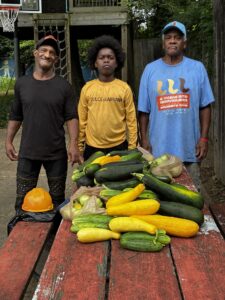
Neighbors, Meals, and Stability: Jacob’s Ladder’s Response to Hunger in an Inner-City Community

In a one-mile-square Memphis neighborhood of about 2,800 residents, Jacob’s Ladder has spent more than 20 years responding to poverty, housing instability, and food insecurity with hands-on community support.

Founded in 2003, the ministry began as a broader neighborhood revitalization effort focused on crime reduction, housing conditions, and economic hardship. Over time, that work expanded into programs that include housing assistance, youth engagement, and food support.

“We serve an inner-city neighborhood where there were enormous amounts of violent crime and financial poverty,” said Rev. William Marler, program contact. “Our objective was to bring the neighborhood up to a healthier place.”

Food ministry became especially critical during the COVID-19 pandemic, when school closures and economic strain increased hunger among children and seniors. Volunteers began preparing and delivering meals after school to help fill the gap left by reduced school-based food access.

As conditions shifted again after schools reopened, the ministry refocused its food efforts on seniors and vulnerable adults living on fixed incomes. For many, even small increases in food support are essential to staying stable.

We try to help people from becoming homeless and help seniors avoid homelessness ... Sometimes an extra meal or two a week makes the difference.

“We try to help people from becoming homeless and help seniors avoid homelessness,” Marler said. “Sometimes an extra meal or two a week makes the difference.”

At its height, Jacob’s Ladder delivered about 30 meals per week—roughly 1,500 meals annually—directly to residents’ homes. The program also serves as a consistent point of contact for individuals who may be isolated or at risk.

Deliveries are intentionally relational, not transactional. Volunteers check in on residents, ask questions, and observe living conditions as part of a broader wellness approach.

“When we deliver food, it also becomes a wellness check,” Marler said. “We ask how they’re doing. We look for signs if something is wrong.”

That personal connection has become a defining feature of the ministry, building trust in a neighborhood where many residents experience isolation or instability.

Before receiving support from the ENCORE Ministry Foundation, sustaining the program depended heavily on small-scale donations and local fundraising. Jacob’s Ladder does not rely on large government food systems, instead drawing support from churches and community partners.

“We’re not dependent on government programs,” Marler said. “Funding is always one of the biggest challenges.”

A major operational shift came when long-time volunteer cooks retired, leaving a gap in both staffing and meal preparation. After an unsuccessful search for outside replacements, the ministry made a significant change: hiring directly from within the neighborhood.

We decided to hire from within the neighborhood ... Now the people who prepare the meals are also beneficiaries of the program.

“We decided to hire from within the neighborhood,” Marler said. “Now the people who prepare the meals are also beneficiaries of the program.”

This approach helped stabilize operations while also creating local employment opportunities, strengthening the connection between service providers and those being served.

Support from the ENCORE Ministry Foundation helped the ministry navigate this transition by covering a significant portion of operating costs.

“The grant helped us cover about 80% of our costs over the year,” Marler said. “It came at a very timely moment for us.”

One of the clearest examples of the ministry’s impact is a longtime participant named Katherine, a senior living alone in a high-need area of the neighborhood. Regular meal deliveries have provided both nutritional support and consistent human contact.

In her case, Jacob’s Ladder staff also identified unsafe housing conditions and worked with city officials to intervene. The home was ultimately deemed unsafe, and efforts began to support her relocation to more stable housing.

“She wants to stay in the neighborhood,” Marler said. “We’re working to make sure she can do that safely.”

For Jacob’s Ladder, addressing food insecurity often means engaging broader issues tied to safety, housing, and dignity.

Looking ahead, the organization is focused on maintaining stability rather than expansion. In a community where needs remain steady and persistent, consistency is the priority.

With continued local engagement and support from ENCORE Ministry Foundation, Jacob’s Ladder remains committed to meeting immediate needs while strengthening long-term resilience—one meal and one neighbor at a time.

About ENCORE Ministry Foundation

ENCORE Ministry Foundation equips congregations to serve older adults through grants, partnerships, leadership development, and age-friendly church certifications. In 2025, the foundation awarded $100,000 to 20 churches through the Kent and Ellen McNish Food Security Grant, supporting food distribution ministries for older adults facing hunger.

To learn more or support the Food Security Fund, visit encoreministry.org or contact Executive Director John Rivas at.

Share the Post:

Related Posts

Be the Hands and Feet of Jesus: Support Feeding Ministries

Together, we can be the hands and feet of Jesus, feeding the hungry, caring for the vulnerable, and showing love to those who need it most. Every dollar you give to the Kent and Ellen McNish Fund for Older Adult Food Security helps feeding ministries stretch resources and serve more meals to those in need. Donate today and help support life-changing feeding ministries like the People’s Table.