[cs_content][cs_element_section _id=”1″ ][cs_element_layout_row _id=”2″ ][cs_element_layout_column _id=”3″ ][cs_element_text _id=”4″ ][cs_content_seo]by Dr. Richard H. Gentzler, Jr.
When I was a child, I used to imagine what it would be like to be as old as my great-grandfather, Sterling Grim. My great-grandfather was a Pennsylvania Dutchman and an active member of the Church of the United Brethren in Christ. He sometimes spoke in German or Pennsylvania Dutch and tried teaching me the language. I had enough difficulty with the English language and could never quite grasp his German tongue. For some reason, his thick white hair and wrinkled face never frightened me. In fact, I was attracted to my great-grandfather because I felt special by his love.
As his only great-grandson, I spent many summers staying with him in the hollows of York County, Pennsylvania. He was the wisest person I knew. As a child, I likened him to my image of God.
My great-grandfather told me stories about his family and life on the farm. Hearing the stories and holding his strong hand as we walked in the park or to church, made me feel that I had something precious in my possession. People we met showed great respect for my great-grandfather. Being with him made me confident that old age would increase my storage of wisdom. I could hardly wait until I became an older adult, had white hair, and was as wise as my great-grandfather!
The Bible provides a good model of the connection between wisdom and aging with Abraham. Genesis 24:1 says, “Now Abraham was old, well advanced in years; and the Lord had blessed Abraham in all things.”
Abraham’s life had been filled with trials, challenges, and joy. It’s in his later years that we meet Abraham in the Bible and see his advanced age and wisdom. At this point, Abraham is able to look back — perhaps for the first time — and see the value of his life.
Why did God bless Abraham in all things? Perhaps the answer is best found in Proverbs 16:31 which states, “Gray hair is a crown of glory; it is gained in a righteous life.” When Abraham practiced righteousness, he was blessed in all things. God proclaimed to Abraham, “By your life, you are worthy of old age.”
We know that old age in and of itself does not necessarily ensure wisdom or righteousness. After all, don’t many of us know some foolish older adults? The ideal is that old age may serve as the context for recognition of a life of righteousness. For Abraham, there is a connection between righteous living and longevity.
Unfortunately, society today often ignores the value of older adults. Our prejudice is based on our consumer-driven society that proclaims if persons are no longer employed or productive, then they are useless and have no meaning. Out of fear of old age, we idolize youth.
Abraham was the first character in biblical history for whom old age was a reward and a blessing. As Rabbi Brad Bloom shared with me several years ago, “Abraham had learned to accept his aging process. And because he could embrace his mortality and his past, God saw fit to grant him the privilege of being old and wise.” What a great insight.
In my youth I never really judged my great-grandfather. I was too consumed by his love and his acceptance of my mischievousness. His strength was his gentle spirit and wisdom. He lived to a great old age and died shortly after I was ordained into ministry.
I never did see his flaws, but I’m certain he had them. We all do. However, I would like to hold onto the image that being old could lead us to wisdom. My great-grandfather, like Abraham, was blessed in his old age with grace and wisdom.
Whether our old age will be a blessing or not may depend on factors beyond our control. However, factors under our control require us to practice righteousness in our daily life. We are a living example of what it means to grow old. We model what it means to be old for succeeding generations in our family, church, and community. In formulating his eight stages of psychosocial development, Erik Erikson understood that the great task for the second half of life is what he termed “generativity” — caring for what comes after us.
Old age provides us with the opportunity to engage in the virtue of care. We care for succeeding generations, the planet, community, God’s creation, social and racial justice, and the dependent and vulnerable among us. As Daniel Levitin wrote in Successful Aging, “Older adults can bring a much-needed compassion to a world being rent by impatience, intolerance, and lack of empathy.”
Older adults develop a sense of being a part of the bigger picture. Although certain faculties may diminish and older minds might process information more slowly than younger minds, older adults are often better at comprehending a lifetime of information and making good decisions based on decades of learning from their mistakes.
Dr. Jonas Salk discovered the vaccine to prevent polio. At 80, Salk expressed concern that too many people are unconcerned with the world that will come after us. He said, “Our greatest responsibility is to be good ancestors.”
As Christians, we need to do more than just hear these words when we consider peace and justice issues, our environment, global warming, and the effects of climate change. If old age is to be blessing, it will depend upon us. Like Abraham and Sterling Grim, may we be found righteous in the eyes of God. Then, and only then, will we be worthy of the gift of old age.
Dr. Richard Gentzler, director, oversees ENCORE Ministry’s mission of providing older adult ministry resources, leader training, and consultations. For more information, email Gentzler at or call 615-400-0539.\n\n[/cs_content_seo][/cs_element_layout_column][/cs_element_layout_row][/cs_element_section][/cs_content]
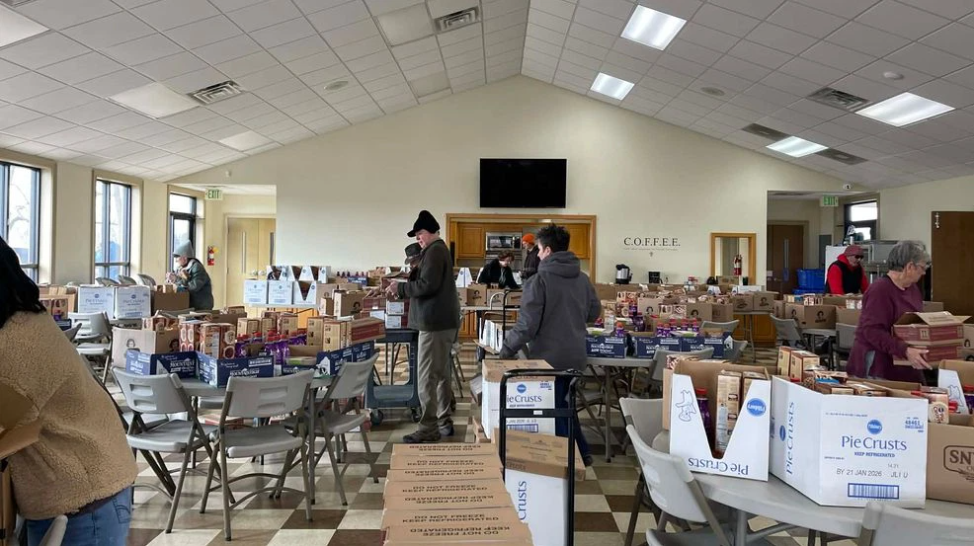
Smyrna Church steps up to fight food insecurity among seniors with help from new grant
Elder’s Chapel United Methodist Church in Smyrna is among 20 churches across Tennessee receiving a $5,000 Food Security Grant from ENCORE Ministry Foundation. The funding is part of a $100,000 initiative aimed at helping churches expand food programs for seniors impacted by rising costs and cuts to SNAP benefits.